
Chamfer Tool
Table of contents:
Introduction
Chamfer
Chamfer a region
Fill Settings
Advanced Setting
Hello!
Welcome to the article, in which we are going to learn about SelfCAD's 3D modeling tool called Chamfer. I am going to explain all of its ins and outs and present its general applications. On top of that, I will share a few Tips and Tricks that you could use with Modifications.
Chamfer is one of the Modify tools available in SelfCAD, and you can find it in the main Toolbar, in the Modify drop-down list. As its name suggests, it allows you to modify selected objects, or selected regions of objects, by beveling the edges of the model.
Modify is a unique category because the tools in it do not rely on the topology of the object to apply their modifications. Instead, they cut the object and create new topology when needed.
On top of that, with the Fill and Advances Settings of the Chamfer, you will be able to customize the bevel even further.
Follow this article to learn all about this tool!
Select the object
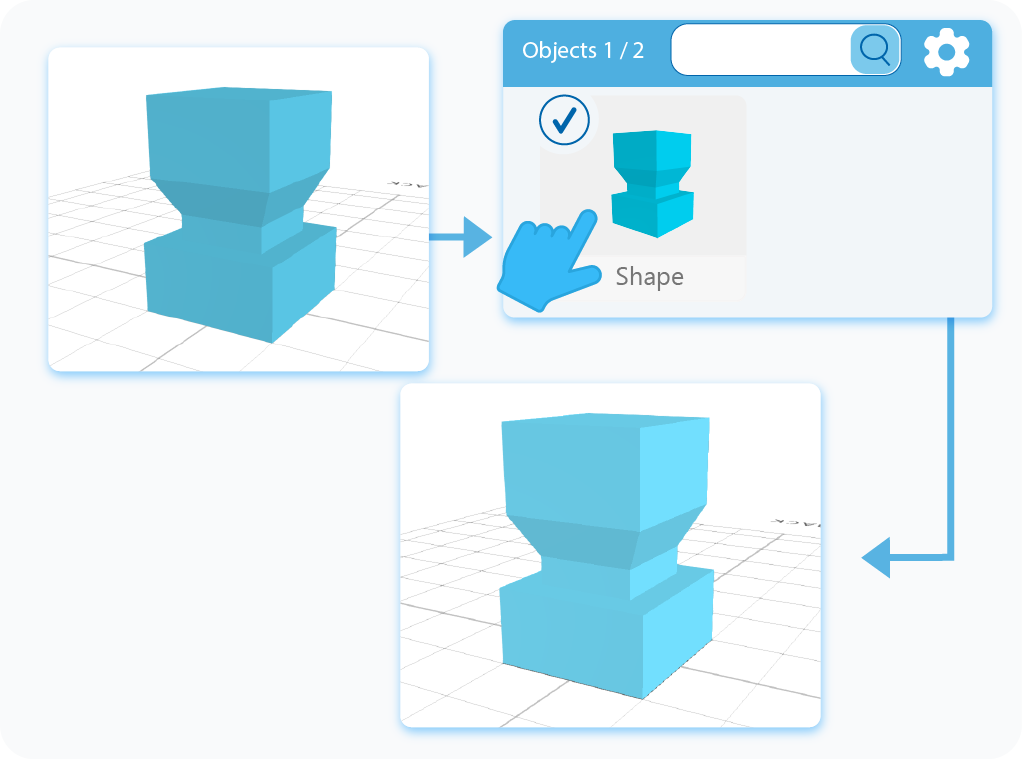
The first step of using any modeling tool is selecting the object on which you want to use it. You can select objects by either left-clicking on them in the workspace or by selecting them in the Object Management section, in the right-side panel. The second option has an in-built search engine, which is extremely useful when you are working with multiple objects.
Activate the tool
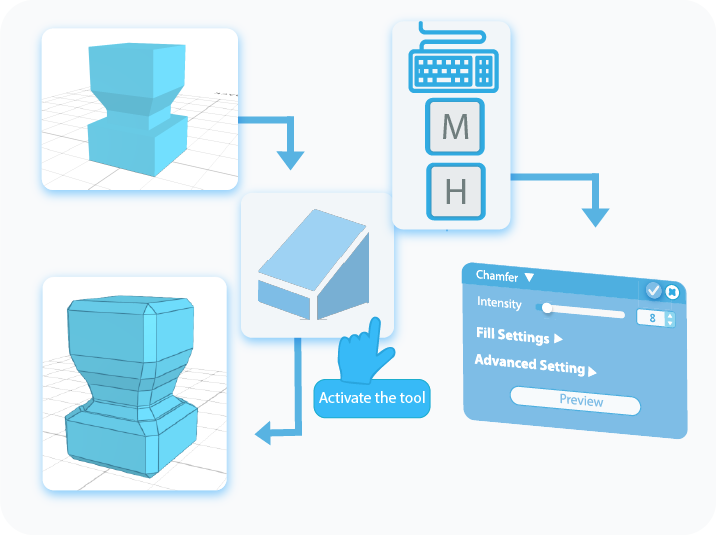
Once the object is selected, you can activate the Chamfer tool by selecting it from the Modify drop-down list or use a shortcut by pressing the ‘M+H’ combination on your keyboard. This way, you’ll open a Tool Setting Panel with all of the customizable options for this tool on the left side of your screen.
Chamfer
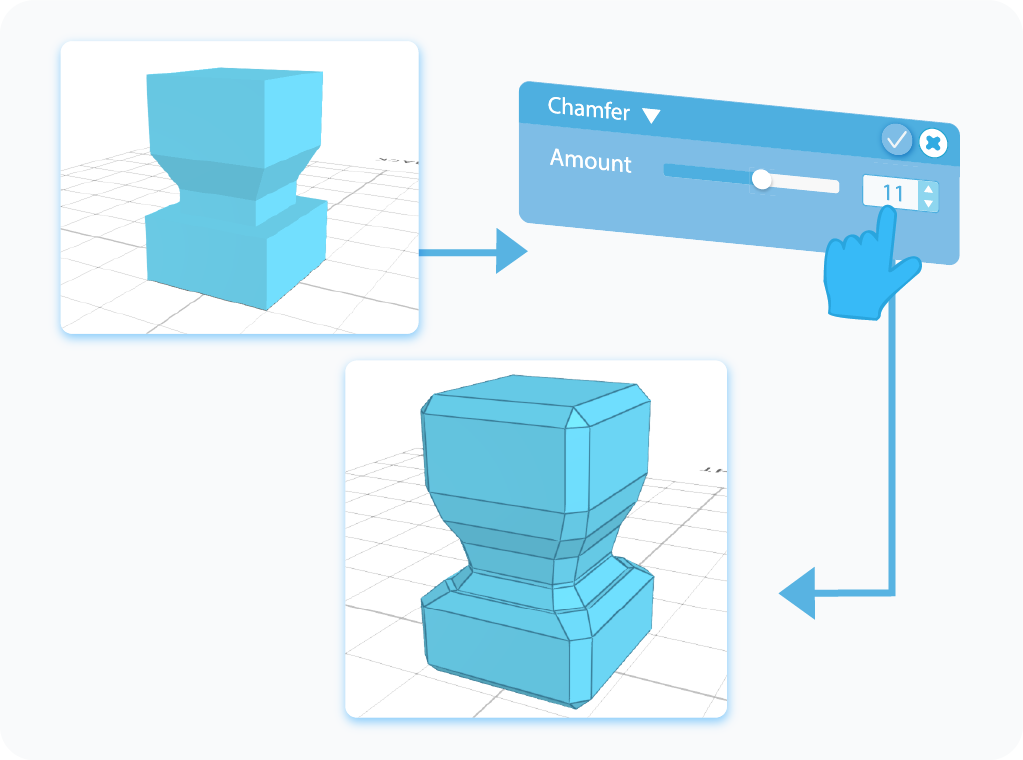
You can Chamfer the model by either manipulating the Intensity slider to customize the modification or by typing the value directly into the text-box in the Tool Settings Panel. In its default application, the Chamfer will apply to each polygon of the object.
Select a region
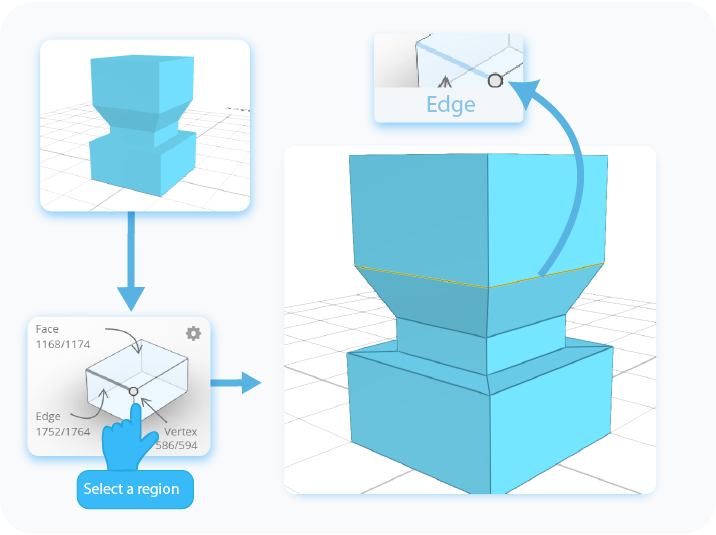
SelfCAD allows you to not only to Chamfer the object itself, but you can also Chamfer some of its regions. To do so, you need to select them first. In the Right Side Panel, you will find an Interactive Rectangle, where you can enter one of the following selection modes: Face, Vertex, and Edge. Then, you can select the parts of the object to whom you want to Chamfer.
Chamfer a region
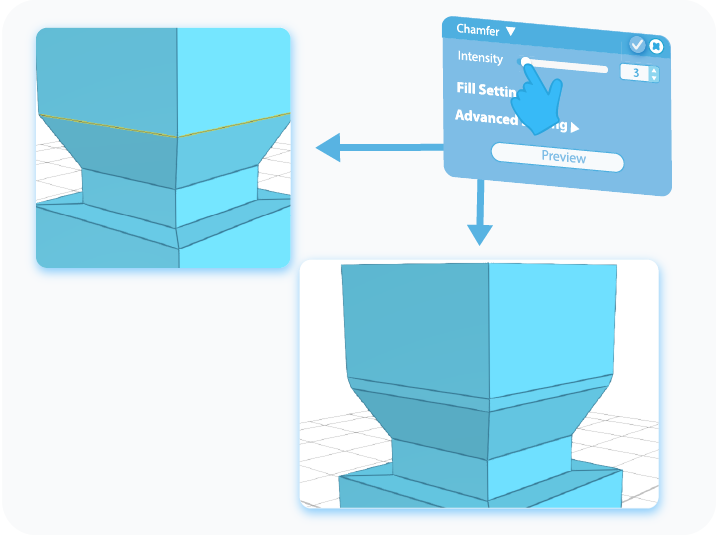
Using Chamfer on regions works exactly the same as using it on the object itself does. After selecting a region or regions, that you want to modify, you can do so by either moving the slider or by typing the value into the text-box to use the Chamfer.
Fill Settings
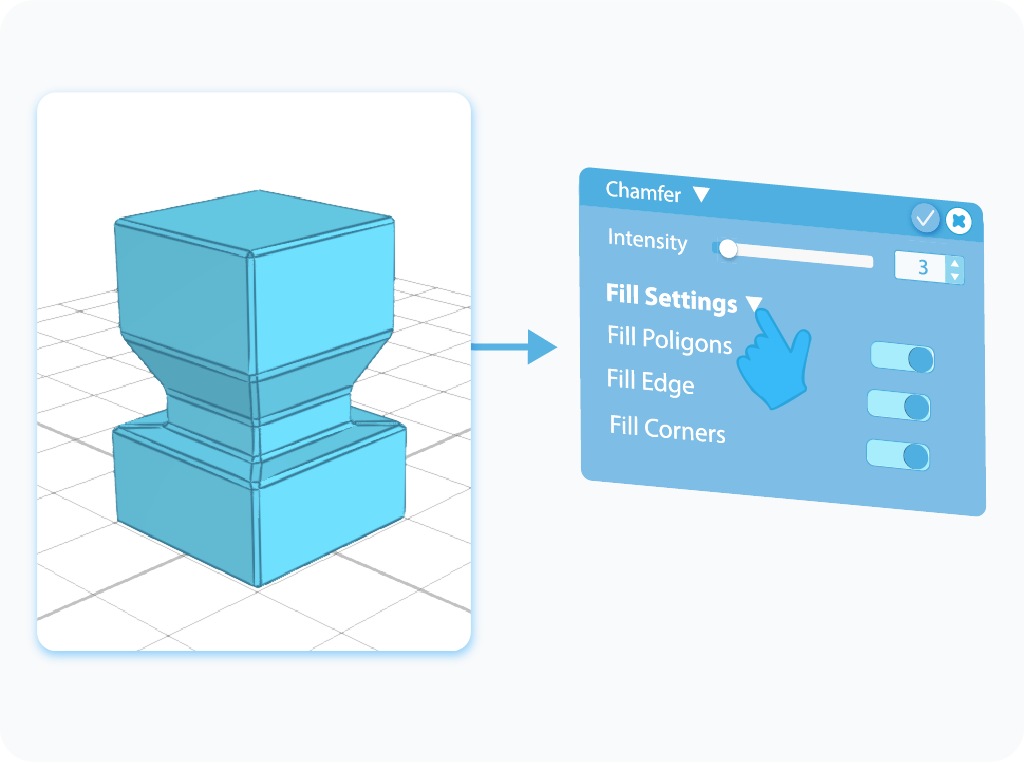
Fill Settings allow you to modify the topology of the object after the Chamfer takes place. All of the Fill Settings are enabled by default, which makes the object manifold, and by disabling them, you will delete parts of its topology.
Fill Polygons
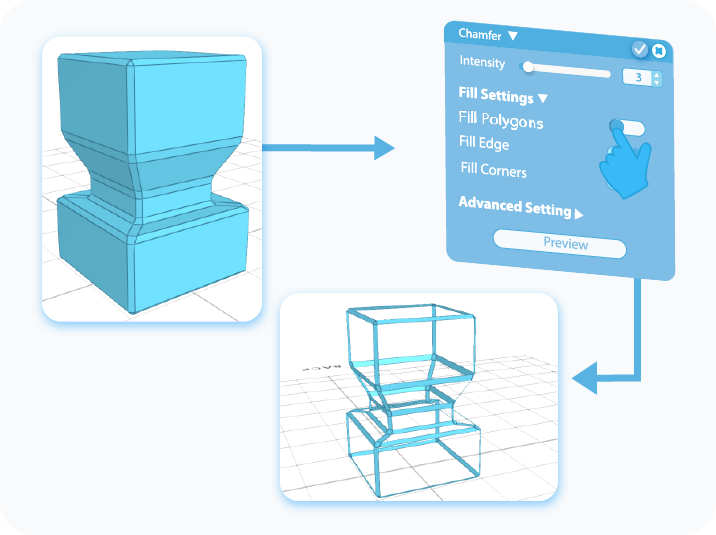
The first option in the Fill Settings is called Fill Polygons. As you can guess, it will modify the object by deleting its Polygons.
Fill Edges
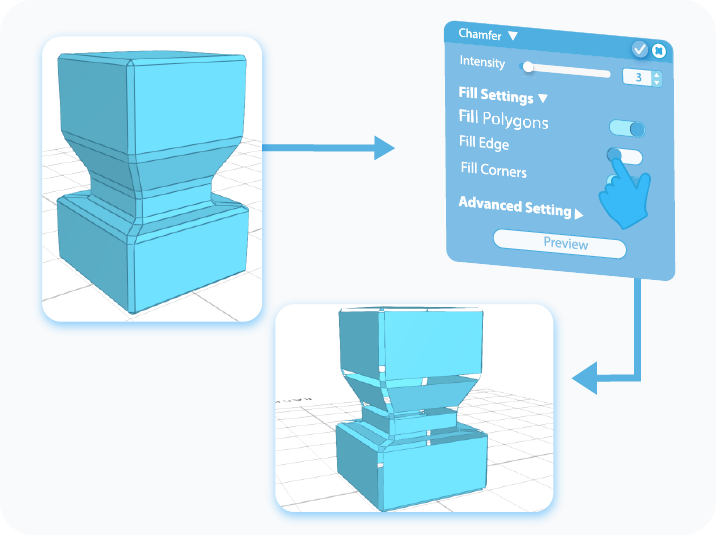
The second option in the Fill Settings is called Fill Edges. Similar to the previous setting, deselecting it will modify the object by deleting the Edges of the object.
Fill Corners
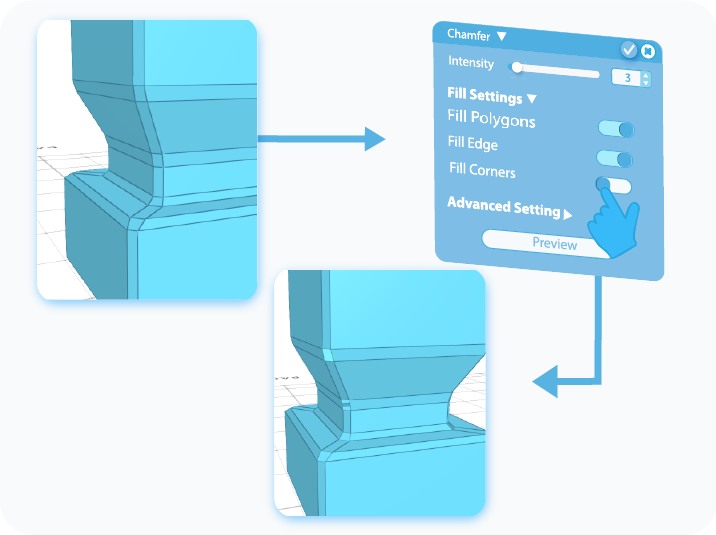
The third and the last of the Fill Settings is called Fill Corners. Just like before, disabling this option will delete the Vertices of the object.
Advanced Setting: Based
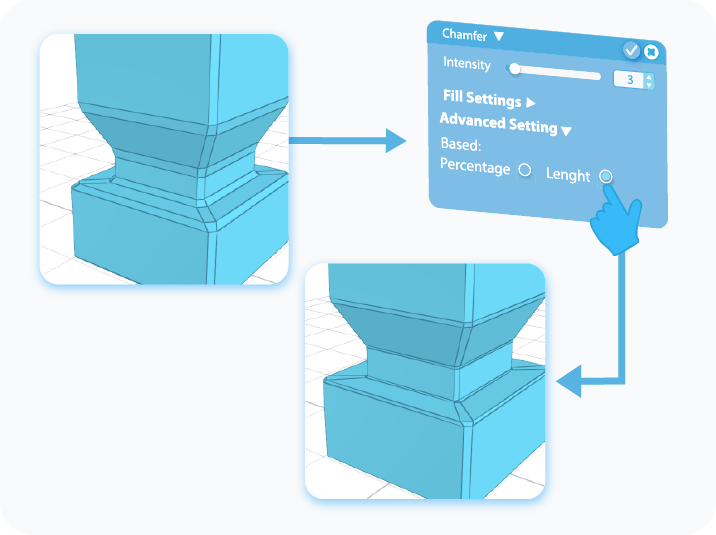
At the bottom are the Advanced Settings of the Chamfer tool. After expanding the drop-down list, you will notice a single setting, which allows you to choose the method of measuring. There are two options here, the Length and Percentage, both of which should be self-explanatory, thus not require a description.
And that’s about it for the Chamfer. After reading this article, you should know the basics of the Chamfer tool and how to use it, and know about its different applications. Of course, the graphics shown here were just examples, and using this tool on other shapes will give you slightly different effects, but its underlying principles will always stay the same.
That's all I have for you today. I wish you success in your future projects. See you, and stay tuned for more content to come!
Haven't tried SelfCAD yet? Register now, and try it out for free!

Do you want to learn 3D modeling? Check out our interactive tutorials.


