
TitanCell Plans to Recycle Plastic Waste in Timor-Leste Using Large-Format 3D Printing
Plastic waste could become a valuable resource for coastal communities in Timor-Leste, thanks to a new large-format 3D printing initiative. Australian companies Hyperion Systems and Inspire Robotics are partnering to bring containerized manufacturing technology to the Southeast Asian nation, turning difficult-to-recycle plastics into boats, marine equipment, and infrastructure components.
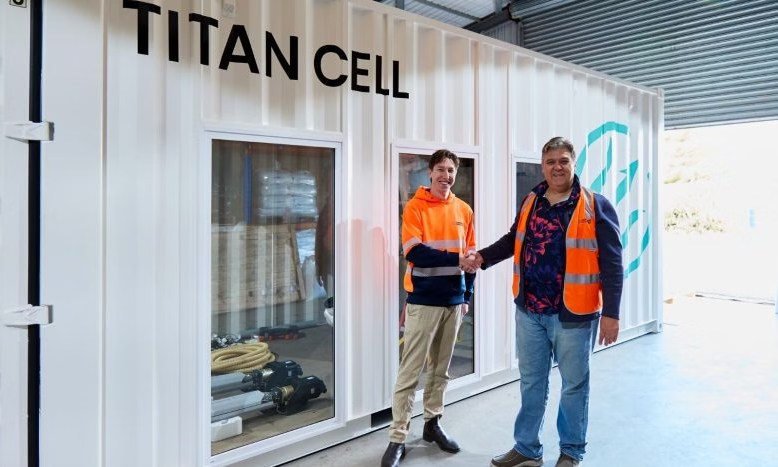
The project combines industrial robotics, large-format additive manufacturing (LFAM), recycled polymers, and AI-enabled systems. Its goal is to reduce plastic pollution while helping local communities manufacture useful products and develop sustainable businesses.
What Is the TitanCell Project?
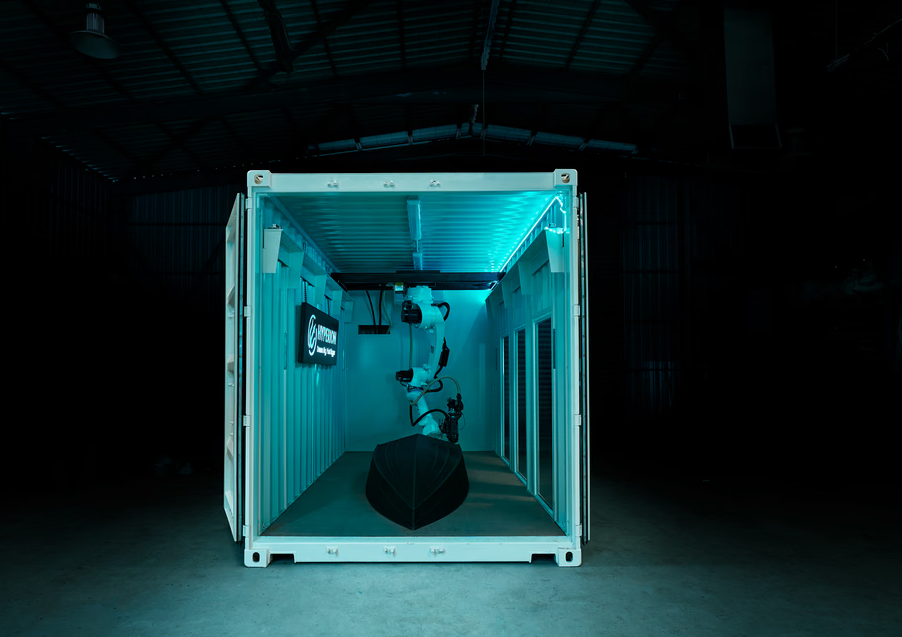
TitanCell is a portable, containerized manufacturing system created by Australia's Hyperion Systems. Innovative technologies such as industrial robotics, large-scale 3D printing, and recycled polymers combine in this portable manufacturing unit.
The TitanCell is designed to produce large components using recycled plastic waste, in contrast to traditional desktop 3D printers that use plastic filament to create smaller items. The machinery can be more easily deployed to remote regions by placing it in a shipping container.
Hyperion Systems has consented to deploy the system through Inspire Robotics' Business-in-a-Box platform, which assists local entrepreneurs in Timor-Leste in establishing eco-friendly businesses. We are projecting that the initial launch will take place in the second half of 2026.
How Will TitanCell Turn Plastic Waste Into 3D-Printed Products?
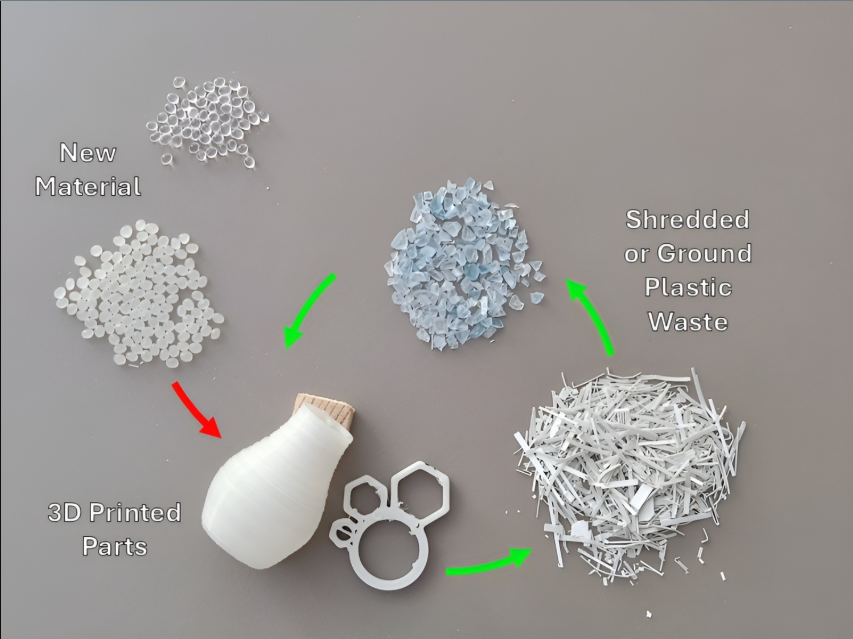
Reusing plastic from coastal areas and industrial waste streams as a raw material for new products is the idea. The project's goal is to find new uses for appropriate waste materials rather than just discarding them. The goal is to create long-lasting, mass-produced goods.
To summarize, the process begins with plastic collection and sorting, continues with material preparation for processing, and ends with feeding the materials into the manufacturing system. In order to make the part, the printer applies material in layers.
The businesses involved in the Timor-Leste deployment, however, have not made available their full material-preparation procedure. Reliability in recycling depends on plastic type, contaminant level, processing temperature, and quality control measures.
TitanCell Specifications and Technical Parameters
Hyperion's published TitanCell specifications show how the system is designed for large-scale production. The following figures describe the platform, not confirmed operating settings for the Timor-Leste project.
|
|
|
|
|
|
|
|
|
|
|
|
|
|
|
|
|
|
|
|
|
|
|
|
|
|
|
|
What Products Will the Project Manufacture?
The first phase will focus on marine applications that support environmental protection and coastal operations. The technology could also support construction and infrastructure needs as the local manufacturing operation develops.
The planned applications include:
- Boats and vessel hulls: Components for crewed and autonomous vessels used in coastal operations.
- Marine equipment: Equipment supporting coastal surveillance, cleanup, and plastic collection.
- Pontoons and marine infrastructure: Large polymer components for coastal and water-based applications.
- Modular construction components: Housing elements, culverts, and other infrastructure products.
These are intended applications rather than a confirmed list of completed products. The initial focus on boats and marine equipment connects the recycling initiative directly to the work needed to recover plastic and protect coastal ecosystems.
What Hyperion Systems and Inspire Robotics Say About TitanCell
Source: VoxelMatters
“The TitanCell was designed to fundamentally rethink manufacturing by taking advanced production capability directly to the point of need,” said Josh Wigley, Chief Executive Officer at Hyperion Systems.
Wigley explained that the project aims to turn plastic waste into useful infrastructure and products while helping communities manufacture locally, create skilled jobs, and build long-term economic resilience. He said Timor-Leste is the beginning, with potential applications in remote communities, island nations, disaster recovery operations, and emerging economies.
The first phase of the project was planned to produce boats and marine equipment for illegal fishing surveillance, mangrove restoration, coastal cleanup, and plastic recovery. The companies also linked the initiative to President José Ramos-Horta’s goal of a “plastic-free” and “carbon-free” country.
Theodore Blackmon, Founder of Inspire Robotics, emphasized the role of local communities in this approach. He said the project aims to turn local problems into local opportunities, using plastic waste as manufacturing feedstock, robotics to empower communities, and AI to support education, entrepreneurship, and environmental regeneration.
Blackmon added that TitanCell could bring industrial-scale, AI-enabled manufacturing to communities that have historically lacked industrial infrastructure. Through their partnership, Inspire Robotics and Hyperion Systems aim to develop a model for distributed circular economies powered by local entrepreneurs.
How AI and Robotics Support Large-Format 3D Printing?
TitanCell combines robotic extrusion with AI-enabled print-path optimization. Rather than moving a conventional desktop printer's toolhead along a small set of fixed axes, a multi-axis industrial robot can deposit material along more complex paths.
AI-assisted path planning can help optimize how the robot builds a component, while remote monitoring and diagnostics support operations at sites with limited technical infrastructure. These capabilities are particularly relevant when producing large parts that require long print runs and consistent material deposition.
The system is also designed to connect to Hyperion Grid, the company's remote support and manufacturing infrastructure. However, the exact AI models, sensors, control algorithms, and automation parameters planned for the Timor-Leste installation have not been disclosed.
Environmental and Economic Benefits for Timor-Leste
The project aims to connect waste recovery with local manufacturing rather than treating recycling as an isolated waste-management activity. Turning recovered plastics into useful products could create demand for collection, sorting, material preparation, machine operation, and maintenance.
Local production may also reduce reliance on imported components and long-distance shipping. Inspire Robotics' Business-in-a-Box model is intended to help local entrepreneurs build businesses around these capabilities.
The initiative aligns with Timor-Leste's stated ambition to reduce plastic pollution and with wider regional efforts to combat marine debris. Still, its actual environmental benefits will depend on how much plastic is recovered, the durability of the products, the energy used in manufacturing, and what happens when printed components reach the end of their useful lives.
When Will TitanCell Become Operational?
The partnership was announced in August 2026, with installation and commissioning planned for later in the year. The companies have not yet published verified production figures for the Timor-Leste facility, such as tonnes of plastic processed, annual output, or the number of boats expected to be manufactured.
The project's next major milestone will be moving from the deployment agreement to a functioning local manufacturing operation. That will help establish whether the system can consistently turn locally recovered plastic into reliable marine and infrastructure products.
Best 3D Design Tool for Large-Format Printing
Before producing a large component, designers need a suitable 3D model that accounts for its dimensions, geometry, and intended use. SelfCAD is a useful 3D design tool for preparing and modifying 3D models, including housings, fixtures, prototypes, and other components that may later be adapted for additive manufacturing.
Its modeling tools, Boolean operations, and mesh-repair features can help prepare geometry for further engineering and slicing workflows. For industrial marine parts, however, designers should also use appropriate engineering analysis and material testing; a printable model alone does not establish structural or seawater durability.
Final Thoughts
TitanCell's planned deployment in Timor-Leste illustrates how large-format 3D printing could connect plastic recovery with practical manufacturing. By combining recycled polymers, robotic extrusion, and local entrepreneurship, Hyperion Systems and Inspire Robotics aim to produce marine equipment and infrastructure while supporting coastal cleanup efforts.
The concept is promising, but the project's success will depend on reliable feedstock preparation, validated printing processes, durable products, and measurable waste-recovery results. The planned installation will be an important test of whether containerized manufacturing can deliver these benefits in a coastal community.
Frequently Asked Questions
1. How will TitanCell recycle plastic waste in Timor-Leste?
Coastal and industrial plastic trash that is appropriate for utilization as a manufacturing feedstock is the target of this research. Ships and other maritime machinery will be among the many massive components made from this material. There has been partial disclosure on the project's plastic-processing workflow.
2. How does AI help TitanCell with large-format 3D printing?
One of TitanCell's stated strengths is AI-enabled print-path optimization. Robotic material deposition can benefit from its use in path optimization. Additionally, the project integrates AI with more general aims of entrepreneurship, education, and community-driven production.
3. What products can TitanCell manufacture from recycled plastic?
Among the possible uses are culverts, marine infrastructure, pontoons, boat hulls, and modular home components. Boats and marine equipment will be the primary emphasis of the first phase in Timor-Leste, with the goals of restoring mangroves, cleaning up the coast, and recovering plastic.
4. What is the build volume of Hyperion's TitanCell?
Hyperion has two layout options for containers: one that is 20 feet long and has a build envelope measuring 4 × 2 x 2 meters, and another that is 40 feet long and has an 8 × 2 × 2 meter envelope. Please confirm the specific arrangement for Timor-Leste independently; these measurements only apply to the specified platform configurations.
5. When will the TitanCell project launch in Timor-Leste?
In August of 2026, Hyperion Systems and Inspire Robotics made an announcement regarding their agreement to deploy. Later that year, the firms intended to install and commission the system. There is a difference between a confirmed operational facility and one with a planned commissioning date.