
SUNLU Launches AMS Lite Heater on Its 13th Anniversary
When it comes to 3D printing, moisture is a major factor in faulty prints. Poor print quality can result from even high-quality filament absorbing water from the air. Drying the filament before printing is a common solution, but it makes every job take longer.
In honour of its thirteenth year in business, SUNLU introduced the AMS Lite Heater, an add-on for the Bambu Lab AMS Lite. It maintains filament hydration during printing rather than before printing. Print quality and prep time are both enhanced by this.
What Is the SUNLU AMS Lite Heater?
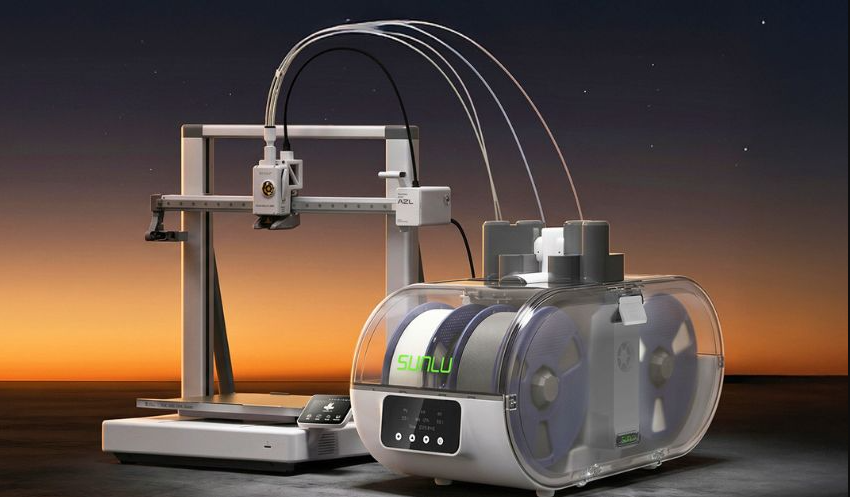
For the Bambu Lab AMS Lite, there is the SUNLU AMS Lite Heater, which is a heated enclosure. Instead of needing a separate drying session before printing, it dries filament throughout the process.
During printing, the heater keeps the area surrounding the filament spool dry. This keeps the filament in better condition for longer print jobs and helps decrease printing difficulties caused by moisture.
Why Does Filament Need to Stay Dry?
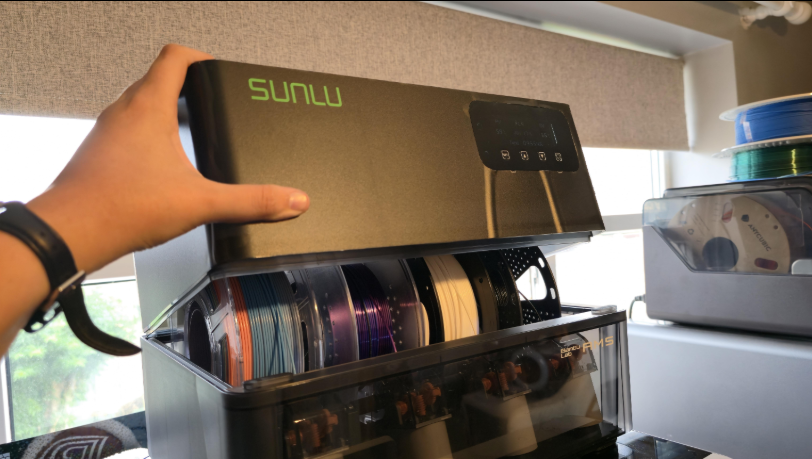
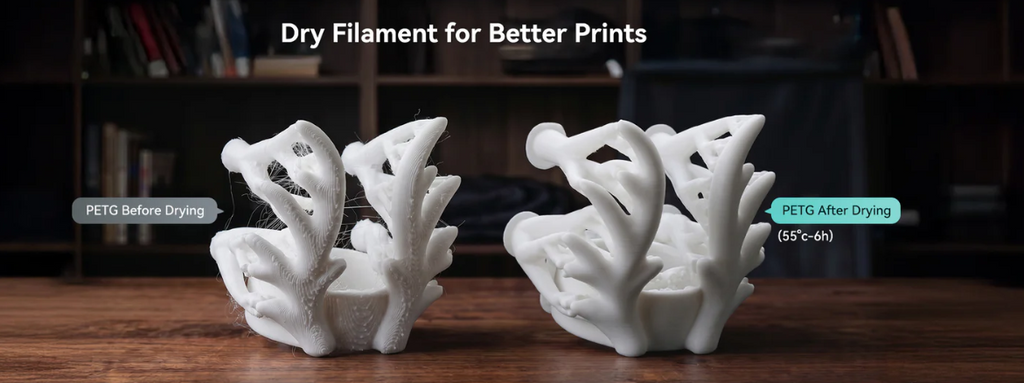
There are a lot of 3D printing materials that can soak up airborne moisture. This is particularly the case when it comes to ABS, PETG, Nylon, and Polycarbonate. The retained moisture in the wet filament evaporates into steam when heated within the nozzle. Print quality and part strength are also impacted by this.
Some common indicators of filament that is moist are:
- Stringing
- Rough surfaces
- Weak layer adhesion
- Popping sounds during printing
- Inconsistent extrusion
- Brittle finished parts
The prints you get will be cleaner, stronger, and more uniform if you keep the filament dry.
How Does the AMS Lite Heater Work?
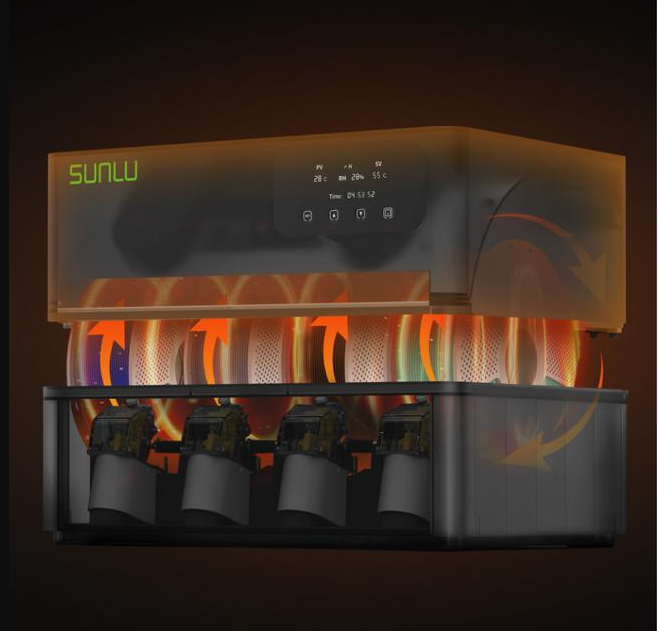
While feeding filament into the printer, the AMS Lite Heater dries it. Users won't have to wait hours for filament to dry before they can begin printing.
Evenly heating the filament and drawing out damp air are both accomplished by means of the enclosure. This maintains low moisture levels during the whole print process, no matter how long it is.
Key Features
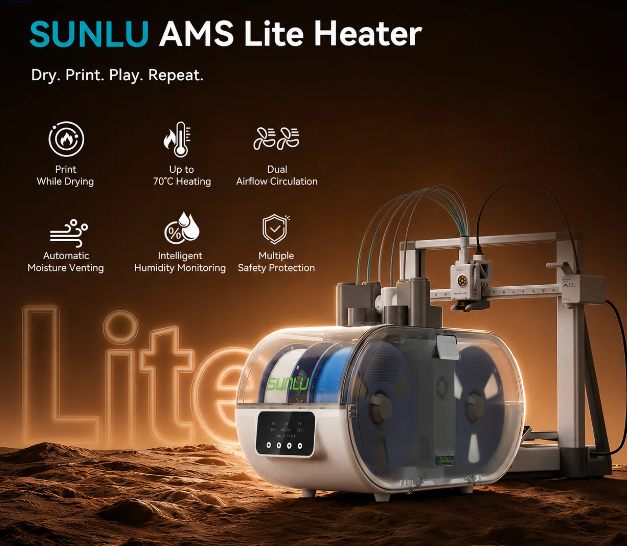
You can trust the AMS Lite Heater since it has multiple qualities that make it reliable.
- Continuous drying during printing
- Heating up to 70°C
- Dual-airflow heating system
- Automatic moisture venting
- Humidity monitoring
- Adjustable temperature and drying time
- Built-in safety protection
- Designed for the Bambu Lab AMS Lite
These features make it easier to keep printing conditions stable with little to no user intervention.
Supports Many Popular Filaments
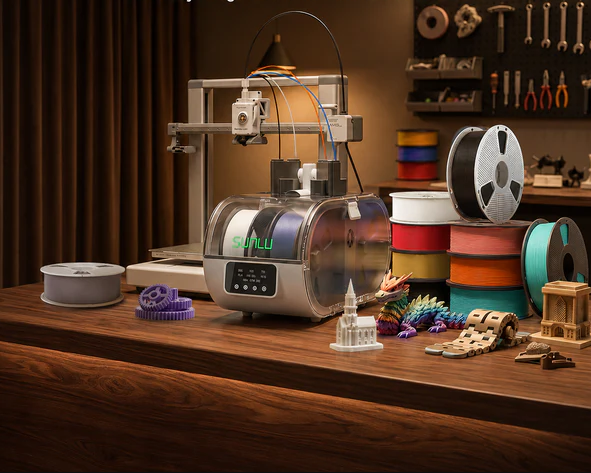
The AMS Lite Heater has a wide range of compatible materials, which is a plus.
PLA, PETG, ABS, ASA, PA (Nylon), and PC (Polycarbonate) are just a few of the popular desktop printing materials that the heater can handle. The degree to which each of these materials absorbs moisture varies. Because of their extreme sensitivity to moisture, nylon and polycarbonate benefit greatly from constant drying.
It is possible to dry these materials while printing with the help of the heater, since it can achieve temperatures of up to 70°C.
Intelligent Humidity Control
Features like the integrated humidity sensor are among the most ingenious.
The heater takes humidity readings from the enclosure as input rather than running continuously. The heater will start drying out the air automatically if the humidity level gets too high. Once the relative humidity reaches the set point, the heating system either slows down or turns off entirely.
Without the user having to keep their eyes on the screen the whole time, this automated process helps keep the printer at the ideal temperature and power consumption levels for lengthy printing sessions.
Better Heat Distribution
Inadequate heat distribution over the spool is the root cause of many filament dryers' failures. As a result, certain parts get hot while others stay wet.
SUNLU uses a two-channel airflow architecture to solve this issue. Instead of remaining stagnant, heated air moves freely around the cage. As a result, the filament dries more uniformly and less of it can overheat.
Even over long projects, uniform heating helps keep print quality consistent.
Automatic Moisture Removal
Just heating the filament won't cut it. It is also necessary for the enclosure to be dry.
While running, the AMS Lite Heater will automatically release any moisture in the air by means of its venting mechanism. When water evaporates off a filament, it forces the humid air out of the chamber, making way for dry air to replace it.
Removing moisture continuously enhances drying efficiency and aids in maintaining consistent humidity levels throughout printing.
Safety Comes First
Due to the high temperatures reached by the heater, SUNLU incorporated multiple safety features.
In order to ensure the safe operation of the equipment, it contains temperature monitoring, door detection, and various protection features. With these safeguards in place, customers can rest assured that their devices will not overheat, even during lengthy printing sessions.
Since many customers keep their printers on overnight or while they are not in the office, ensuring their safety is of utmost importance.
Price and Release Date
On July 20, 2026, SUNLU will release the AMS Lite Heater.
There will be a suggested retail price of $129.99. Not included in the package is the Bambu Lab AMS Lite unit; however, it is essential to the product's functionality.
Why This Product Matters
One of the most significant issues with FDM 3D printing is the use of dry filament.
As it stands, the majority of users get over this issue by making their own drying boxes, investing in food dehydrators, or utilising specialised filament dryers. These approaches do the trick, but you have to be patient because it normally takes a few hours before printing can start.
An alternative to that process is the AMS Lite Heater. Users may now accomplish both tasks simultaneously, eliminating the need to wait for drying before printing. This preserves filament quality across lengthy prints, cuts down on interruptions, and saves time.
Less faulty printing is good news for enthusiasts. By decreasing downtime between jobs, it can increase productivity for professionals.
SUNLU's 13th Anniversary
To commemorate their thirteenth year in business, SUNLU has released the AMS Lite Heater.
In addition, the business shared news of worldwide anniversary sales, community rewards, and prizes. SUNLU is also increasing production in the US to decrease shipping delays and increase product availability.
Best 3D Modeling Software for Education
Before you can get the best results from the SUNLU AMS Lite Heater, you need a well-designed 3D model. SelfCAD, an amazing 3D modeling tool, makes this process simple with beginner-friendly tools and an all-in-one workflow. You can create models from scratch using the 3D Shapes tool, fine-tune details with Sculpting Tools, prepare models for printing with the built-in Slicer, and fix common mesh issues using Magic Fix. These tools help you design printable models quickly while reducing errors before you start printing.
Final Thoughts
An easy way to fix a typical issue with FDM 3D printing is with the SUNLU AMS Lite Heater. It helps to achieve more consistent results by drying the filament while printing, which removes an additional step in preparation.
This add-on simplifies filament drying, decreases print failures, and improves print quality for Bambu Lab AMS Lite users, all without requiring them to alter their current process.
Frequently Asked Questions (FAQs)
1. Does the SUNLU AMS Lite Heater work with every 3D printer?
No. For use with the Bambu Lab AMS Lite, we recommend the AMS Lite Heater. It won't work with regular spool holders or other AMS systems.
2. Can the AMS Lite Heater dry filament while printing?
Yes. Printing and drying at the same time is its key characteristic. You won't have to worry about drying the filament before each print because the heater dries it as it goes into the printer.
3. Which filament types are supported?
Among the numerous widely used FDM materials that the AMS Lite Heater is compatible with are PLA, PETG, ABS, ASA, PA (Nylon), and PC (Polycarbonate). In particular, continuous drying is useful for moisture-sensitive polymers such as polycarbonate and nylon.
4. What is the maximum drying temperature?
You may set the dryer to dry at temperatures up to 70 degrees Celsius. Depending on the filament material, users can also customise the drying time.
5. Does the AMS Lite Heater monitor humidity automatically?
Yes. Intelligent humidity monitoring is a part of it. After the system detects that the relative humidity within the container rises above a certain threshold, drying will begin mechanically.
6. Why should I dry my filament?
Problems with stringing, layer adhesion, surface roughness, popping sounds during extrusion, and printed item weakness might result from filament that is too wet. Your prints will be cleaner and stronger if you keep the filament dry.