
Prusa’s New CORE One Upgrade Lets You Print Up to 400 °C
Prusa’s HT Hotend Upgrade lets compatible CORE One printers reach 400°C nozzle temperatures. This opens the door to advanced materials such as PPS-CF, PPS-GF, and PPA-CF, which are used for demanding functional parts.
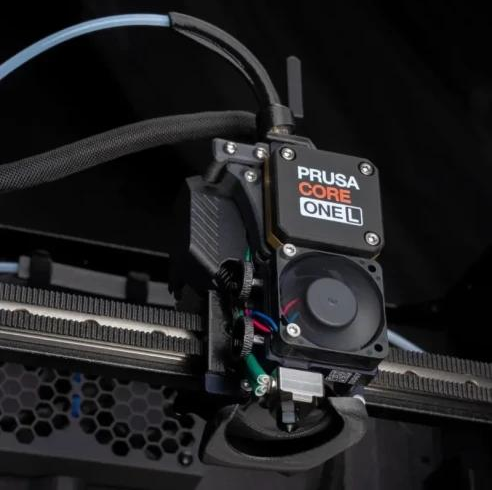
The upgrade also aims to improve layer adhesion with selected existing filaments. Here are its main features, specifications, price, and competitors.
Prusa’s New CORE One Upgrade: An Overview
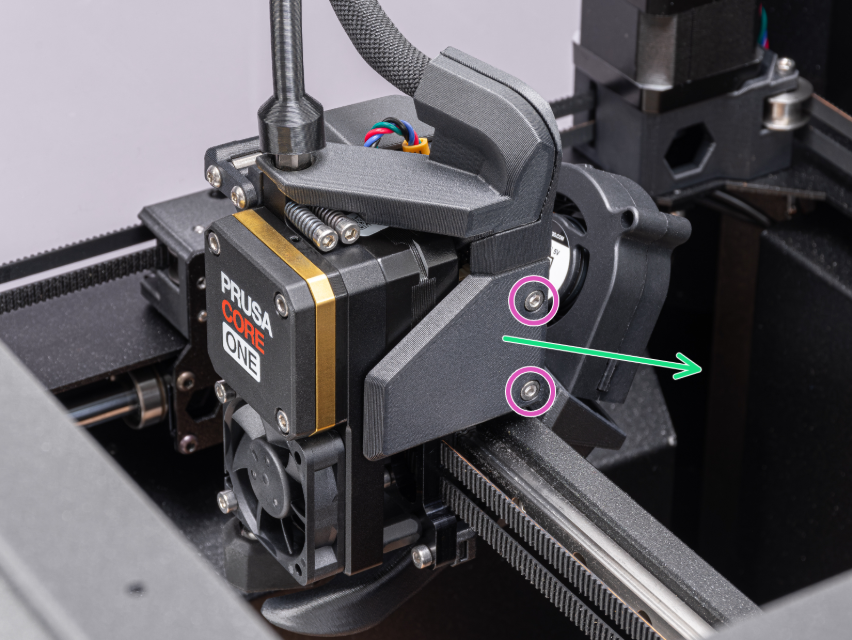
Prusa’s new HT Hotend Upgrade for the CORE One series raises the maximum nozzle temperature to 400°C, allowing compatible printers to handle more demanding engineering materials. It supports filaments such as PPS-CF, PPS-GF, and PPA-CF, which are used to make heat-resistant, durable functional parts. The upgrade also includes a hardened ObXidian 500 nozzle and updated hardware designed for high-temperature printing.
The upgrade is compatible with selected CORE One models, including the CORE One, CORE One+, CORE One+ (Gen 2), CORE One L, and CORE One L+. Prusa also reports improved layer adhesion with certain carbon-fiber-reinforced filaments. Priced at around $184.26 on Prusa’s US store at the time checked, it offers existing owners a way to gain higher-temperature printing capabilities without buying a new printer. However, material compatibility still depends on the filament, printer conditions, and validated settings.
400°C High-Temperature Hotend
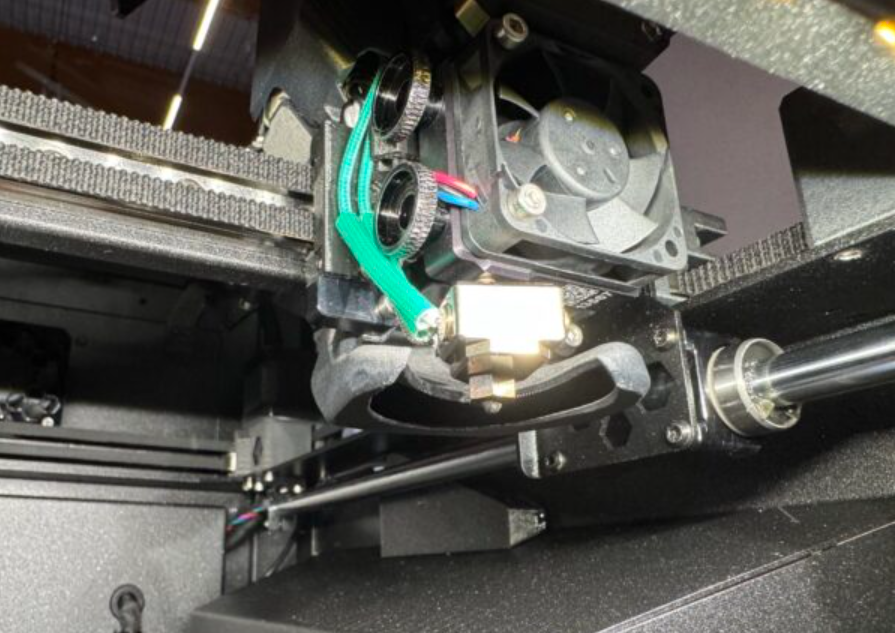
The HT Hotend raises the maximum nozzle temperature to 400°C, compared with the standard CORE One hotend’s 290°C limit. This allows users to work with a broader range of engineering filaments.
Materials such as PPS-CF and PPS-GF offer high heat and chemical resistance, making them useful for demanding components. However, each filament still needs suitable printing conditions and a validated profile.
Compatible With the CORE One Family
The upgrade supports the Prusa CORE One, CORE One+, CORE One+ (Gen 2), CORE One L, and CORE One L+.
It is an option for existing owners who need higher nozzle temperatures without replacing their entire printer. It is not compatible with the MK4S, XL, or MINI+. Check the official compatibility list before ordering.
Supports Advanced Engineering Filaments
Prusa lists high-temperature profiles for several materials, including:
- PPS-CF and PPS-GF: Heat- and chemical-resistant materials reinforced with carbon or glass fibers.
- PPA-CF: A reinforced polyamide for rigid, demanding parts.
- PA11-CF: A carbon-fiber nylon suited to functional components.
- PC Blend Carbon Fiber: An engineering material that can benefit from improved layer bonding.
- ASA and PC Blend: Existing materials that may also benefit from higher-temperature profiles.
These materials are useful for functional prototypes, brackets, housings, and workshop components. Actual performance depends on the material grade, part design, and print settings.
Improved Layer Adhesion
Printing at a higher temperature helps improve layer bonding. Parts made from certain materials, such as PA11-CF and PC Blend Carbon Fiber, can be up to 30% stronger, according to Prusa.
While the manufacturer claims this to be the case, it is by no means guaranteed for every print job. You may still influence strength by adjusting the orientation of the part, wall thickness, material condition, and cooling parameters.
Hardened ObXidian 500 Nozzle
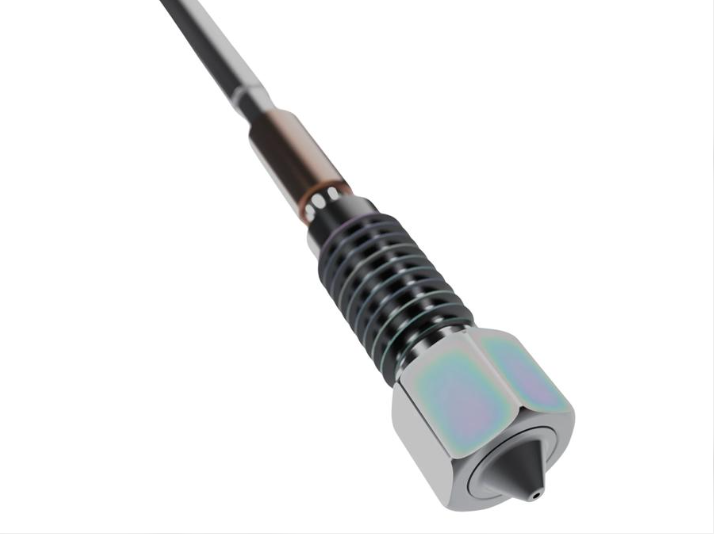
A hardened ObXidian 500 nozzle with a standard flow of 0.4 mm is part of the update. Because of its construction, it can withstand the extreme heat and abrasive fiber-filled filaments used to print engineering materials.
Prusa only works with certain E3D ObXidian Standard Flow 500 nozzle sizes—0.4 mm and 0.6 mm—that are compatible with the platform. You can't use regular or high-flow nozzles with this hotend.
What's Included in the Upgrade?
The HT Hotend, two idlers for various filament types, instructions, a PC Blend Carbon Fiber replacement main plate, protective gloves, and more are all part of the bundle.
There is more to installation than just swapping out the nozzle. When it comes to replacing hardware, installing, and calibrating your hotend, Prusa has you covered with a dedicated guide. The handbook says it's a moderately challenging process.
Prusa HT Hotend Specifications
|
|
|
|
|
|
|
|
|
|
|
|
|
|
|
|
|
|
|
|
|
Specifications and compatibility are based on Prusa’s official product page and documentation. Price and availability can change.
Extra Equipment You May Need
Not all high-performance filaments work well with a 400°C hotend. A dry feeding and storage arrangement, an appropriate construction surface, and good air circulation or filtration are requirements for some materials.
For useful processes, Prusa provides a drybox, a high-temperature print sheet, and a sophisticated filtering system. Prior to printing, be sure to review the filament manufacturer's specifications, especially for materials that emit fumes or particles.
How Much Does It Cost?
On their US store, Prusa advertises the HT Hotend Upgrade for $184.26. Not a full CORE One printer, but that is the price of the hotend upgrade. Depending on your requirements, you may incur additional costs for filters, a high-temperature print sheet, a drybox, and appropriate filament.
5 Competitors to Prusa’s 400°C HT Hotend Upgrade
1. Bambu Lab H2S
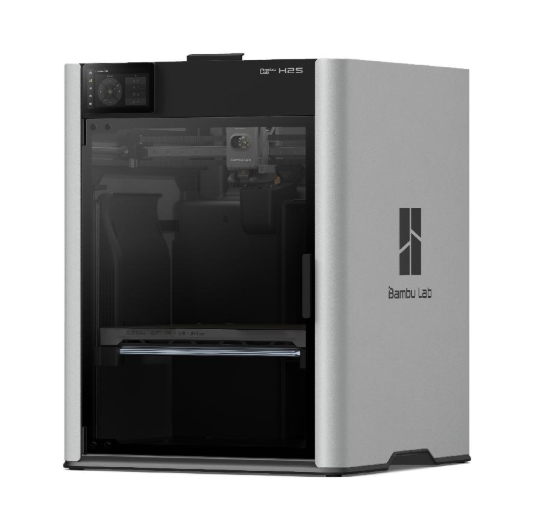
With a build volume of 340 × 320 × 340 mm, a hotend temperature of 350°C, and an active chamber heating capacity of up to 65°C, the Bambu Lab H2S is an enclosed CoreXY 3D printer. Automatic calibration, AI-assisted print monitoring, and optional multi-color printing are further features it offers. Users looking for a new machine instead of an upgrade may wish to consider the H2S, which is a full printer alternative to Prusa's HT Hotend. Its nozzle temperature is lower than Prusa's 400°C maximum, so it can't compete.
Price: From $1,199.
2. QIDI Max4
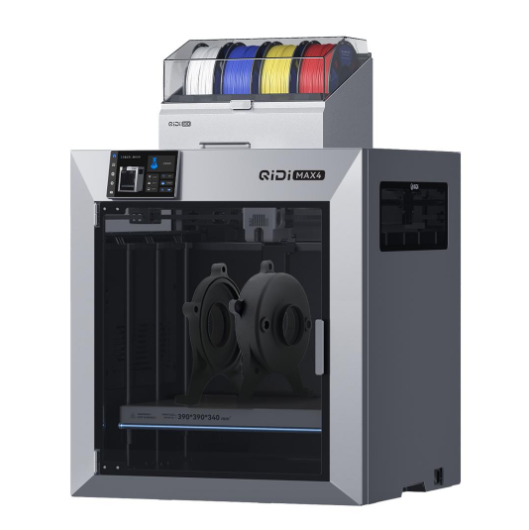
The QIDI Max4 targets users who need a large build area for engineering parts and functional prototypes. It provides a 390 × 390 × 340 mm build volume, a 370°C hotend, and active chamber heating up to 65°C. Other features include a hardened-steel direct-drive extruder, a three-stage air filter, and support for carbon- and glass-fiber-reinforced filaments. Its larger build area makes it worth considering for users who need to print bigger parts than the Prusa CORE One can accommodate.
Price: Listed at $1,199 for the standard printer
3. QIDI Plus5
The QIDI Plus5 offers a 320 × 320 × 300 mm build volume, a 370°C nozzle, and active chamber heating up to 65°C. Its CoreXY motion system supports toolhead speeds of up to 600 mm/s, while the enclosed design and three-stage filtration system suit a range of engineering materials. It is a practical alternative for users who want high-temperature printing and a larger build area without moving into the more expensive large-format category.
Price: $749 for the standard printer at the time checked.
4. QIDI Q2
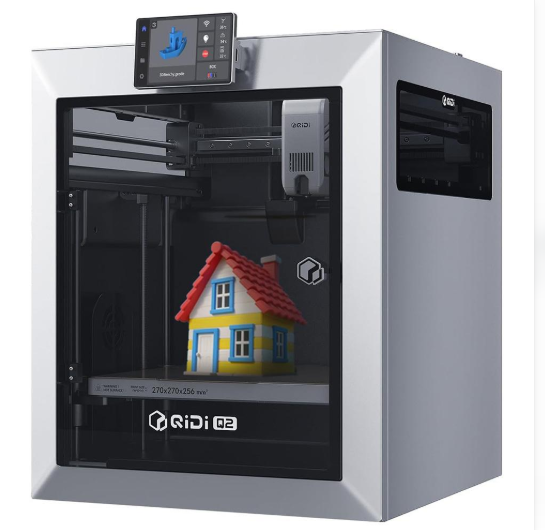
The QIDI Q2 is a more compact alternative with a 270 × 270 × 256 mm build volume, a 370°C hotend, and active chamber heating up to 65°C. It supports materials including ABS, ASA, PA, PC, and fiber-reinforced filaments. The printer also includes automatic bed leveling, a direct-drive extruder, and air filtration. Its smaller footprint may suit makers who want engineering-material capabilities but do not need the large build area of the Max4 or Plus5.
Price: $499 for the standard printer at the time checked.
5. Bambu Lab H2D
The Bambu Lab H2D is a dual-nozzle enclosed 3D printer designed for multi-material production and advanced workshop use. It features a 350°C hotend, active chamber heating up to 65°C, and a large build area. Depending on the configuration, the system also supports accessories for laser engraving and cutting. Its dual-nozzle design is useful for certain multi-material workflows, while Prusa’s HT Hotend has a higher maximum nozzle temperature.
Price: $1999
Best 3D Modeling Software
Before printing with high-temperature filaments, you need a model with clean geometry and suitable dimensions. SelfCAD is a practical 3D design tool for creating and preparing functional parts, such as brackets, housings, and machine components. Its Boolean tools let you cut holes and combine shapes, while Fillet and Chamfer help refine edges. Magic Fix can repair common mesh issues, and Simplify Object can reduce unnecessary polygon complexity. You can then prepare the model for slicing and printing. Pairing SelfCAD with Prusa’s HT Hotend upgrade helps you move from designing engineering parts to printing them with compatible high-temperature materials.
Is Prusa’s New CORE One Upgrade Worth It?
The HT Hotend is a practical option for CORE One owners who regularly print engineering materials and want a higher nozzle-temperature limit without buying another machine.
Its main strengths are the 400°C capability, hardened nozzle, compatibility with the CORE One family, and improved layer adhesion reported with selected filaments. Its limits are equally important: the hotend alone does not provide the chamber conditions or material settings required for every high-performance polymer.
For everyday PLA and PETG printing, the stock hotend should remain sufficient. For users working with PPS-CF, PPA-CF, and other demanding materials, the upgrade offers a more capable route to high-temperature printing.