
Best Metal 3D Printing Services: Our 8 Top Picks
Metal 3D printing makes it possible to produce complex, lightweight, and functional metal components without the tooling required for many traditional manufacturing methods. From titanium aerospace components to stainless steel prototypes and aluminum heat exchangers, professional service providers can turn a CAD file into a finished metal part using processes such as DMLS, SLM, metal binder jetting, and other additive manufacturing technologies.
The right service depends on more than the type of metal available. Build size, production volume, certifications, finishing, inspection, turnaround time, and engineering support can all affect the final result. Below are 10 established metal 3D printing services worth considering for prototyping, low-volume manufacturing, tooling, and end-use parts.
1. Protolabs
Key features and specs:
- DMLS metal 3D printing
- Aluminum, titanium, stainless steel, Inconel, and cobalt chrome
- Metal parts in as little as 7 days
- ISO 9001, ISO 13485, AS9100D, and ITAR capabilities
- CNC machining, EDM, heat treatment, and finishing
- Instant online quoting with design-for-additive feedback
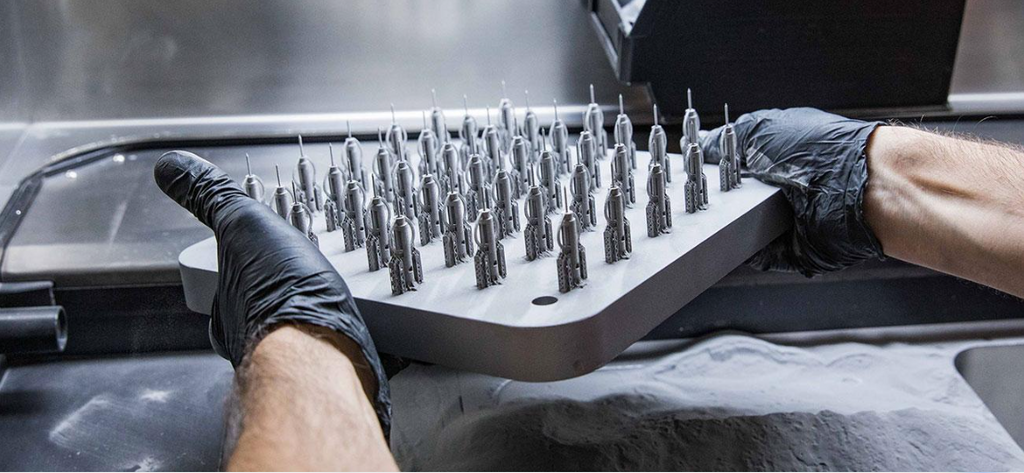
Engineers looking for metal 3D-printed prototypes or production parts without the need to invest in their own industrial equipment have a well-established choice in Protolabs. Its DMLS service is ideal for low-volume prototyping and production since it makes usable metal components from production-grade materials.
Cobalt chrome, Inconel718, stainless steel 316L and 17-4 PH, aluminumSi10Mg, titanium Ti6Al4V, and other materials are all compatible with this service. Additional post-processing services offered by Protolabs include milling, turning, wire EDM, tapping, reaming, heat treatment, HIP, and surface finishing. One of the main reasons it is often chosen for engineering applications is its high-quality infrastructure.
As part of its production project services, Protolabs provides material traceability, mechanical testing, dimensional inspection, CMM, CT scanning, powder analysis, and first article inspection. Additionally, it is capable of producing aluminum and Inconel parts with dimensions up to about 31.5 × 15.7 × 19.7 inches using its large-format metal operations.
2. Xometry
Key features and specs:
- DMLS and metal binder jetting
- More than 60 metal and plastic materials across its broader 3D printing platform
- Instant online quoting
- ISO 9001, ISO 13485, IATF 16949, and AS9100D certifications
- ITAR-registered manufacturing options
- Supports prototypes through production quantities
Xometry is an online manufacturing platform that offers metal 3D printing through DMLS and metal binder jetting. Customers can choose the process based on their part and production requirements.
Its online quoting system lets you upload a CAD file, select manufacturing specifications, and receive pricing and lead-time details. Xometry supports both prototypes and larger production runs, making it suitable for developers moving from testing to repeat manufacturing.
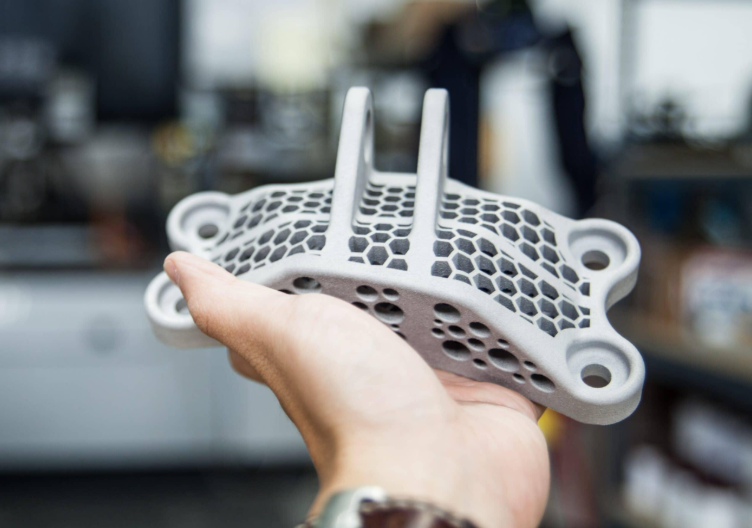
Metal 3D printing is useful for complex parts with internal channels, lattice structures, and topology-optimized designs that are difficult to machine. Xometry also provides CNC machining, sheet metal fabrication, injection molding, and other manufacturing services through the same platform.
3. Materialise
Key features and specs:
- Industrial metal additive manufacturing
- Aluminum, titanium, stainless steel, and Inconel
- 30+ industrial metal 3D printers
- 3,500 m² dedicated metal 3D printing facility
- ISO 9001 and EN 9100-certified facilities and processes
- Standard and performance production grades
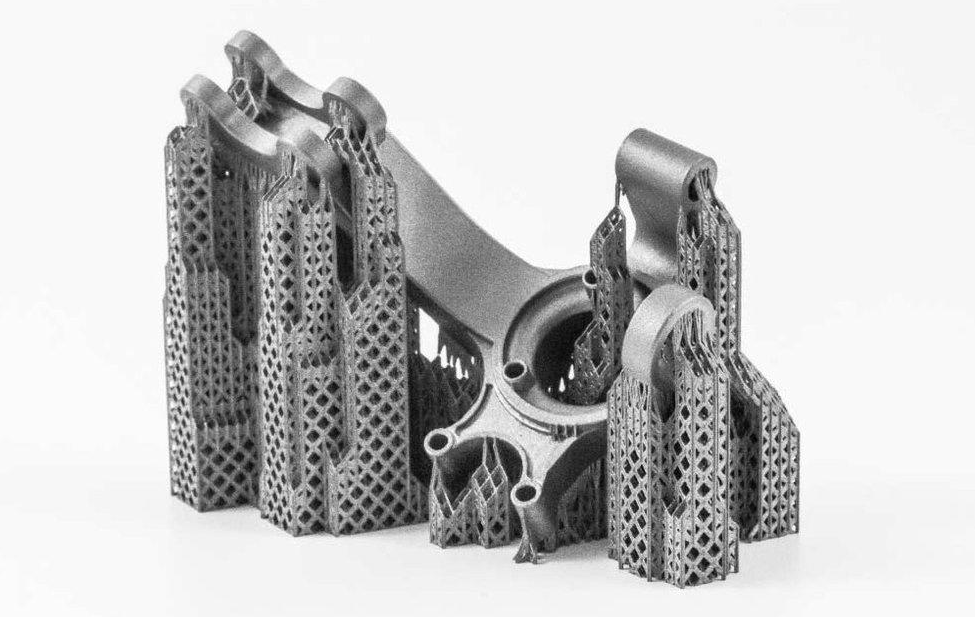
Materialise is suited to industrial customers who need more than basic metal printing. Its materials include AlSi10Mg aluminum, Ti6Al4V titanium, 316L stainless steel, Inconel 718, and C465 stainless steel. Maximum part sizes reach 500 × 280 × 345 mm for aluminum and up to 250 × 250 × 305 mm for several other metals.
Its metal production is available in Standard and Performance grades. Standard is designed for form, fit, and function testing and simpler end-use parts, while Performance targets more complex production components and demanding applications. Layer thickness ranges from 0.04–0.09 mm, depending on the material, with post-processing options including smoothing, assembly, machining, and polishing.
Materialise also has experience in aerospace and healthcare, making its certification and documented production capabilities valuable for regulated projects. Its EN 9100 certification is particularly relevant to aerospace manufacturing.
4. Sculpteo
Key features and specs:
- DMLS and SLM metal 3D printing
- Aluminum, titanium, and 316L stainless steel
- Metal binder jetting for 316L
- Online file upload and instant quoting
- ISO 9001-certified production
- Multiple finishing and manufacturing options
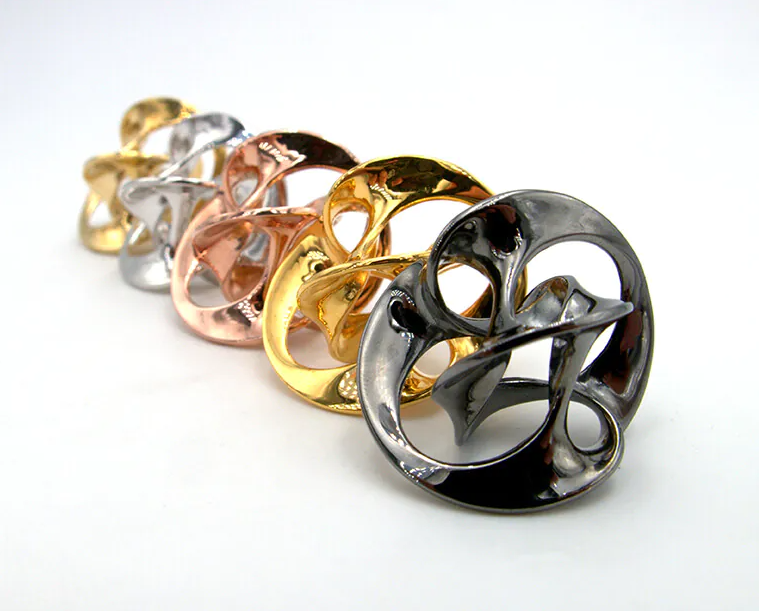
Sculpteo is an online 3D printing service that connects digital designs with professionally manufactured metal parts for both prototyping and production. It supports multiple metal additive manufacturing technologies.
Its DMLS/SLM service includes aluminum, 316L stainless steel, and Ti6Al4V titanium, while HP binder jetting is available for 316L stainless steel. This gives users different production options based on their project requirements.
Sculpteo also publishes technical specifications to help designers check compatibility before ordering. For several materials, its DMLS/SLM systems support parts up to 220 × 220 × 250 mm, with published information on layer thickness, wall thickness, and accuracy.
5. Unionfab
Key features and specs:
- DMLS, SLM, and metal binder jetting
- 30+ qualified metal materials
- More than 100 industrial metal printing systems
- Standard turnaround of around 5–7 days
- ISO 9001, ISO 14001, ISO 13485, and IATF 16949 certifications
- No minimum order quantity
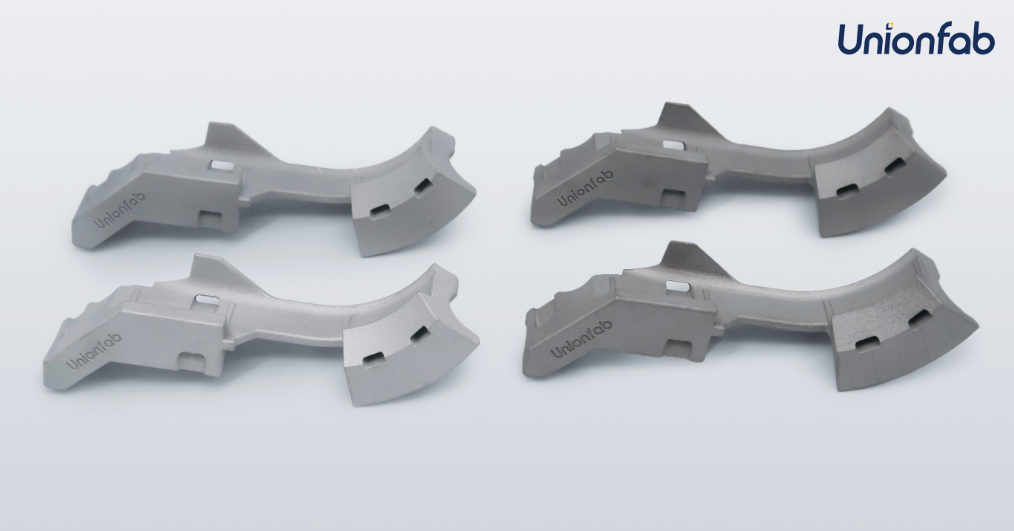
Unionfab is a China-based manufacturing service offering metal additive manufacturing for rapid prototyping and low-volume production. It supports DMLS, SLM, and binder jetting, with more than 30 qualified metal materials, including 316L stainless steel, titanium, and AlSi10Mg aluminum.
Unionfab provides a free design-for-manufacturing review to identify potential issues with geometry, supports, and material selection before production. The company lists typical turnaround times of around 5–7 days, depending on the part and finishing requirements.
Additional services include heat treatment, sandblasting, polishing, and CNC machining. Its metal printing capabilities are suited to tooling, automotive and aerospace components, medical parts, robotic fixtures, and other functional metal applications.
6. Quickparts
Key features and specs:
- Metal additive manufacturing for prototypes and production
- Stainless steel 316L
- Nickel alloys 625 and 718
- Titanium Ti6Al4V
- Aluminum AlSi10Mg
- Heat treatment, EDM, milling, polishing, turning, and welding
Quickparts is a digital manufacturing service focused on both additive and traditional production. Its metal 3D printing service is aimed at customers who need custom components manufactured without setting up their own metal additive workflow.
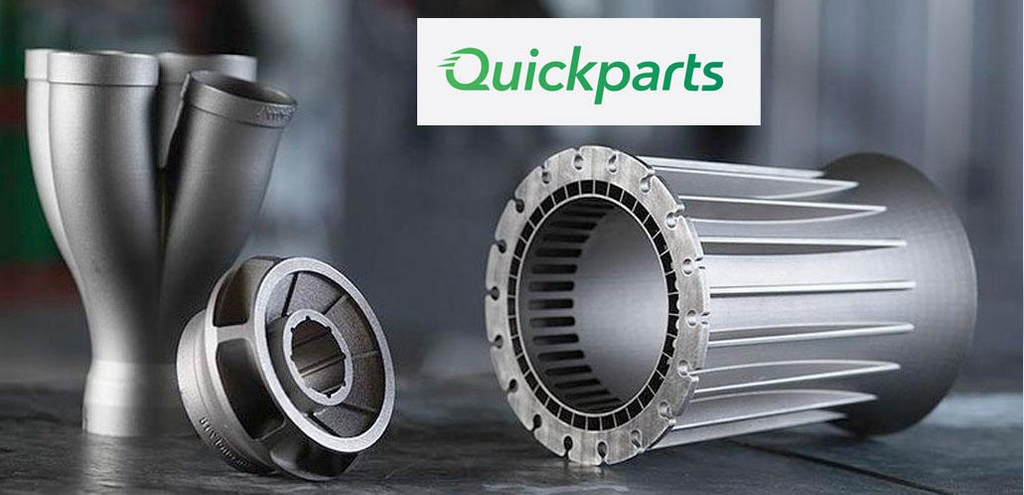
The company lists several commonly used engineering metals, including stainless steel 316L, nickel alloys 625 and 718, titanium Ti6Al4V, and aluminum AlSi10Mg. This selection covers applications where corrosion resistance, high strength, low weight, or elevated-temperature performance is important.
One of Quickparts' advantages is its combination of metal printing with post-processing. Customers can request services such as EDM, grinding, heat treatment, milling, polishing, turning, anodizing, and welding. This can reduce the number of separate suppliers involved in taking a printed part from its initial build to a finished component.
Quickparts also supports projects ranging from individual prototypes to larger production requirements. Its global manufacturing network and engineering support make it relevant to companies that need assistance selecting a suitable manufacturing process rather than simply uploading a file and ordering a print.
7. Fathom
Key features and specs:
- DMLS metal 3D printing
- Designed for prototypes, bridge production, and low-volume production
- Complex geometries and conformal cooling channels
- Aerospace, medical, dental, and automotive applications
- Metal additive design and engineering support
- Machining and post-processing available
Fathom focuses on industrial additive manufacturing and is particularly relevant when the project involves complex metal geometry. Its DMLS service is designed to produce functional metal parts without the tooling normally associated with casting or other conventional manufacturing processes.
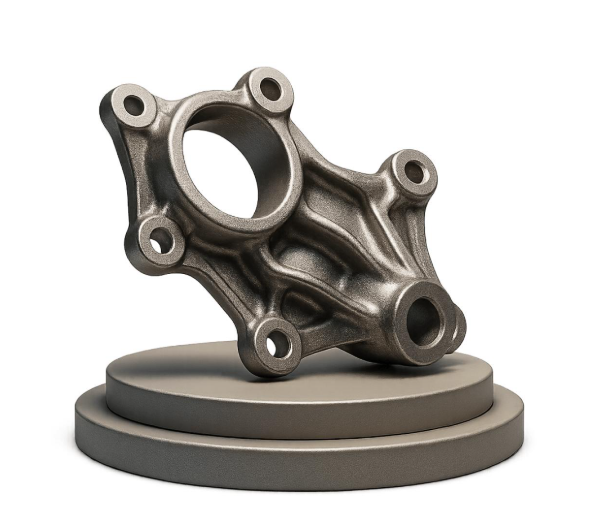
One of the important applications for Fathom's DMLS service is conformal cooling. Because additive manufacturing can create channels beneath the surface of a tool, engineers can design cooling paths that would be difficult or impossible to machine conventionally. Fathom has used this approach for injection-molding tooling and other applications where thermal management is important.
The service is also positioned for aerospace, medical, dental, and automotive applications. Fathom provides design guidance around support structures, orientation, feature sizing, and other DMLS considerations before production. This engineering input can be valuable when a component is being designed specifically for metal additive manufacturing rather than simply reproduced from an existing machined part.
8. Sintavia
Key features and specs:
- Industrial metal additive manufacturing
- 23 large and extra-large industrial printers
- Nickel, copper, titanium, aluminum, and refractory metals
- Aerospace and defense specialization
- In-house HIP and vacuum heat treatment
- Integrated machining and surface finishing
Sintavia is focused heavily on high-performance metal additive manufacturing for aerospace and defense applications. The company operates 23 large and extra-large industrial printers and uses proprietary metal process parameters for materials including nickel, copper, titanium, aluminum, and refractory metals. Its equipment includes multiple EOS, AMCM, and SLM Solutions systems.
Sintavia also handles several important stages of production internally. Its facilities include hot isostatic pressing, vacuum heat treatment, wire EDM, machining, and surface-finishing equipment. This vertical integration can be particularly useful for aerospace components where the printed geometry is only one part of the overall manufacturing and qualification process.
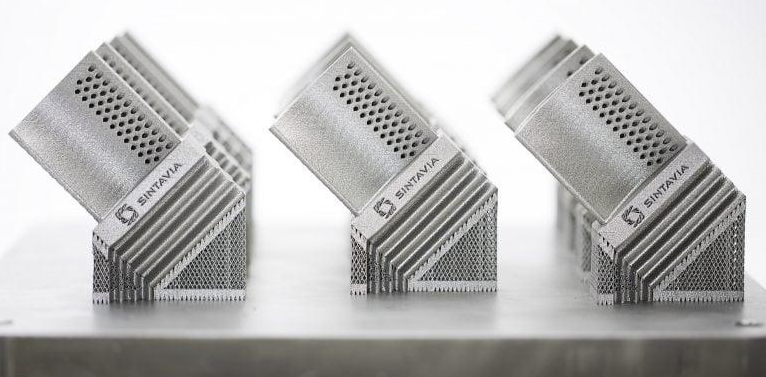
The company produces components such as heat exchangers, turbomachinery components, advanced fuel systems, and combustion-related components. Its focus makes it more appropriate for industrial and high-performance projects than casual maker jobs.
Best 3D Modeling Software for Education
SelfCAD can be useful before sending a design to a metal 3D printing service. Its modeling tools let you create and refine parts, adjust dimensions, and prepare geometry for manufacturing. Tools such as Fillet, Chamfer, Boolean operations, Resolution, and Simplify Object can help clean up and optimize a model before export. Once the design is ready, you can export it in formats such as STL and send it to a metal 3D printing provider for quoting and production.